
Main Page: Difference between revisions
No edit summary |
No edit summary |
||
| (2 intermediate revisions by the same user not shown) | |||
| Line 6: | Line 6: | ||
<div class="banner-cont" style="padding:35px 25px;background-color: #fff;"> | <div class="banner-cont" style="padding:35px 25px;background-color: #fff;"> | ||
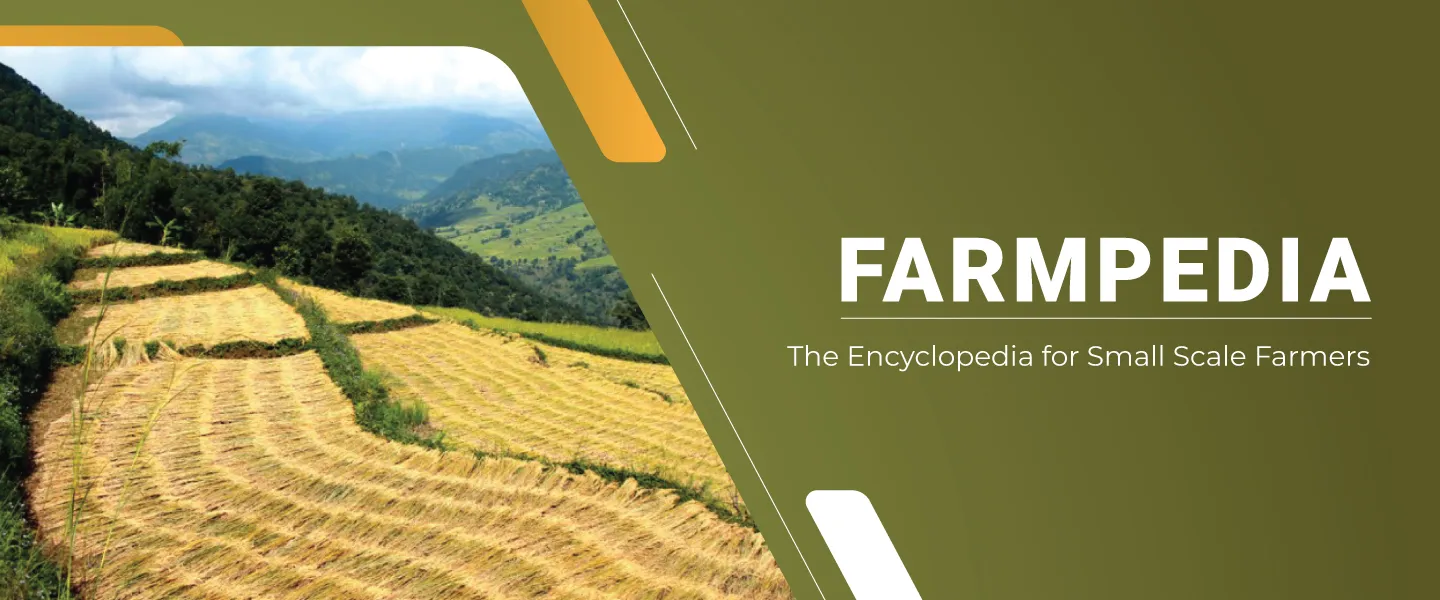
<p> Farmpedia is an online, free, open-access encyclopedia of sustainable, low cost, gender-friendly solutions to empower small scale (smallholder) farmers in developing nations. There are 236 chapters and growing. Using the left Toolbar, chapters can be translated into 108 languages and downloaded. Edited by Professor Manish N. Raizada, University of Guelph, Canada. </p> | <p> Farmpedia is an online, free, open-access encyclopedia of sustainable, low cost, gender-friendly solutions to empower small scale (smallholder) farmers in developing nations. There are 236 chapters and growing. Using the left Toolbar, chapters can be translated into 108 languages and downloaded. Edited by Professor Manish N. Raizada, University of Guelph, Canada. </p> | ||
</div> | |||
<div class="about-section" style="padding:30px 25px; background-color:#f9f9f9; border-top:1px solid #e0e0e0;"> | |||
<h2>About Farmpedia</h2> | |||
<p>Farmpedia is built for the estimated 500 million smallholder farmers worldwide who manage farms of less than two hectares. These farmers produce approximately 70% of the food consumed in developing nations, yet they often lack access to affordable, reliable agricultural knowledge. Farmpedia bridges that gap by providing free, open-access guides written in plain language and reviewed by agricultural scientists.</p> | |||
<p>Every chapter on Farmpedia focuses on low-cost, sustainable solutions that can be implemented with locally available materials. Whether you are managing soil erosion on a hillside farm in East Africa, storing grain after harvest in South Asia, or protecting your crops from pests without expensive chemicals, Farmpedia has practical, science-backed guidance tailored to real farming conditions.</p> | |||
<h2>How to Use Farmpedia</h2> | |||
<p>Browse the sections below to find topics relevant to your farm. Each section contains multiple chapters covering specific techniques, tools, and practices. Use the translation toolbar on the left to read any chapter in your preferred language — over 108 languages are supported. You can also download chapters for offline reading, which is especially useful in areas with limited internet connectivity.</p> | |||
<p>Farmpedia is freely editable by registered users. If you are an agricultural researcher, extension officer, or experienced farmer, we welcome your contributions. New chapters and updates are continuously reviewed to maintain accuracy and practical relevance.</p> | |||
<h2>Why Sustainable, Low-Cost Farming Matters</h2> | |||
<p>Small-scale farmers face increasing pressure from climate change, soil degradation, water scarcity, and rising input costs. Conventional farming advice often assumes access to expensive machinery, chemical inputs, or irrigation infrastructure that most smallholder farmers cannot afford. Farmpedia specifically curates techniques that work within the constraints of low-resource farming environments, helping farmers increase yields, reduce losses, and improve household nutrition without taking on financial risk.</p> | |||
<p>Topics covered include land preparation, water harvesting, composting, integrated pest management, post-harvest storage, livestock health, and much more. The encyclopedia is edited by Professor Manish N. Raizada of the University of Guelph, Canada, and draws on decades of agricultural research conducted in partnership with farming communities across Africa, Asia, and Latin America.</p> | |||
</div> | </div> | ||
| Line 20: | Line 41: | ||
<h2>Land preparation and Sowing</h2> | <h2>Land preparation and Sowing</h2> | ||
<div class="btn-grp"> | <div class="btn-grp"> | ||
<div class="btn btn-2">[ | <div class="btn btn-2">[[Land-preparation-and-sowing|Land Preparation and Sowing]]</div> | ||
</div> | </div> | ||
</div> | </div> | ||
| Line 33: | Line 54: | ||
<h2>Crop and Tree Intensification</h2> | <h2>Crop and Tree Intensification</h2> | ||
<div class="btn-grp"> | <div class="btn-grp"> | ||
<div class="btn btn-2">[ | <div class="btn btn-2">[[Crop-and-tree-intensification|Crop and Tree Intensification]]</div> | ||
</div> | </div> | ||
</div> | </div> | ||
| Line 46: | Line 67: | ||
<h2>Terrace agriculture</h2> | <h2>Terrace agriculture</h2> | ||
<div class="btn-grp"> | <div class="btn-grp"> | ||
<div class="btn btn-2">[ | <div class="btn btn-2">[[Terrace-and-hillside-agriculture|Terrace and Hillside Agriculture]]</div> | ||
</div> | </div> | ||
</div> | </div> | ||
| Line 63: | Line 84: | ||
<h2>Soil Health</h2> | <h2>Soil Health</h2> | ||
<div class="btn-grp"> | <div class="btn-grp"> | ||
<div class="btn btn-2">[ | <div class="btn btn-2">[[Soil-health|Soil Health]]</div> | ||
</div> | </div> | ||
</div> | </div> | ||
| Line 76: | Line 97: | ||
<h2>Water and Drought Resiliency</h2> | <h2>Water and Drought Resiliency</h2> | ||
<div class="btn-grp"> | <div class="btn-grp"> | ||
<div class="btn btn-2">[ | <div class="btn btn-2">[[Water-and-drought-resiliency|Water and Drought Resiliency]]</div> | ||
</div> | </div> | ||
</div> | </div> | ||
| Line 89: | Line 110: | ||
<h2>Weed Control</h2> | <h2>Weed Control</h2> | ||
<div class="btn-grp"> | <div class="btn-grp"> | ||
<div class="btn btn-2">[ | <div class="btn btn-2">[[Weed-control|Weed Control]]</div> | ||
</div> | </div> | ||
</div> | </div> | ||
| Line 106: | Line 127: | ||
<h2>Crop Pest and Disease Control</h2> | <h2>Crop Pest and Disease Control</h2> | ||
<div class="btn-grp"> | <div class="btn-grp"> | ||
<div class="btn btn-2">[ | <div class="btn btn-2">[[Crop-pest-and-disease-control|Crop Pest and Disease Control]]</div> | ||
</div> | </div> | ||
</div> | </div> | ||
| Line 119: | Line 140: | ||
<h2>Post Harvest Technologies and Value Addition</h2> | <h2>Post Harvest Technologies and Value Addition</h2> | ||
<div class="btn-grp"> | <div class="btn-grp"> | ||
<div class="btn btn-2">[ | <div class="btn btn-2">[[Post-harvest-technologies-and-value-addition|Post Harvest Technologies and Value Addition]]</div> | ||
</div> | </div> | ||
</div> | </div> | ||
| Line 132: | Line 153: | ||
<h2>Improving Human Nutrition & Health</h2> | <h2>Improving Human Nutrition & Health</h2> | ||
<div class="btn-grp"> | <div class="btn-grp"> | ||
<div class="btn btn-2">[ | <div class="btn btn-2">[[Improving-human-nutrition-health|Improving Human Nutrition and Health]]</div> | ||
</div> | </div> | ||
</div> | </div> | ||
| Line 149: | Line 170: | ||
<h2>Livestock, Poultry and Fish Health and Productivity</h2> | <h2>Livestock, Poultry and Fish Health and Productivity</h2> | ||
<div class="btn-grp"> | <div class="btn-grp"> | ||
<div class="btn btn-2">[ | <div class="btn btn-2">[[Livestock-poultry-and-fish-health-and-productivity|Livestock, Poultry and Fish Health]]</div> | ||
</div> | </div> | ||
</div> | </div> | ||
| Line 162: | Line 183: | ||
<h2>Crop Breeding by Farmers</h2> | <h2>Crop Breeding by Farmers</h2> | ||
<div class="btn-grp"> | <div class="btn-grp"> | ||
<div class="btn btn-2">[ | <div class="btn btn-2">[[Crop-breeding-by-farmers|Crop Breeding by Farmers]]</div> | ||
</div> | </div> | ||
</div> | </div> | ||
| Line 175: | Line 196: | ||
<h2>Rural Disaster Relief</h2> | <h2>Rural Disaster Relief</h2> | ||
<div class="btn-grp"> | <div class="btn-grp"> | ||
<div class="btn btn-2">[ | <div class="btn btn-2">[[Rural-disaster-relief|Rural Disaster Relief]]</div> | ||
</div> | </div> | ||
</div> | </div> | ||
| Line 192: | Line 213: | ||
<h2>Scientific Method, Social Economic & Training Method</h2> | <h2>Scientific Method, Social Economic & Training Method</h2> | ||
<div class="btn-grp"> | <div class="btn-grp"> | ||
<div class="btn btn-2">[ | <div class="btn btn-2">[[Scientific-method|Scientific Method and Training]]</div> | ||
</div> | </div> | ||
</div> | </div> | ||
Latest revision as of 12:08, 20 April 2026

About Farmpedia
Farmpedia is built for the estimated 500 million smallholder farmers worldwide who manage farms of less than two hectares. These farmers produce approximately 70% of the food consumed in developing nations, yet they often lack access to affordable, reliable agricultural knowledge. Farmpedia bridges that gap by providing free, open-access guides written in plain language and reviewed by agricultural scientists.
Every chapter on Farmpedia focuses on low-cost, sustainable solutions that can be implemented with locally available materials. Whether you are managing soil erosion on a hillside farm in East Africa, storing grain after harvest in South Asia, or protecting your crops from pests without expensive chemicals, Farmpedia has practical, science-backed guidance tailored to real farming conditions.
How to Use Farmpedia
Browse the sections below to find topics relevant to your farm. Each section contains multiple chapters covering specific techniques, tools, and practices. Use the translation toolbar on the left to read any chapter in your preferred language — over 108 languages are supported. You can also download chapters for offline reading, which is especially useful in areas with limited internet connectivity.
Farmpedia is freely editable by registered users. If you are an agricultural researcher, extension officer, or experienced farmer, we welcome your contributions. New chapters and updates are continuously reviewed to maintain accuracy and practical relevance.
Why Sustainable, Low-Cost Farming Matters
Small-scale farmers face increasing pressure from climate change, soil degradation, water scarcity, and rising input costs. Conventional farming advice often assumes access to expensive machinery, chemical inputs, or irrigation infrastructure that most smallholder farmers cannot afford. Farmpedia specifically curates techniques that work within the constraints of low-resource farming environments, helping farmers increase yields, reduce losses, and improve household nutrition without taking on financial risk.
Topics covered include land preparation, water harvesting, composting, integrated pest management, post-harvest storage, livestock health, and much more. The encyclopedia is edited by Professor Manish N. Raizada of the University of Guelph, Canada, and draws on decades of agricultural research conducted in partnership with farming communities across Africa, Asia, and Latin America.
Sections


Section 8 (61 Chapters)
Post Harvest Technologies and Value Addition


Section 10 (16 Chapters)
Livestock, Poultry and Fish Health and Productivity


Section 13 (1 Chapter)